
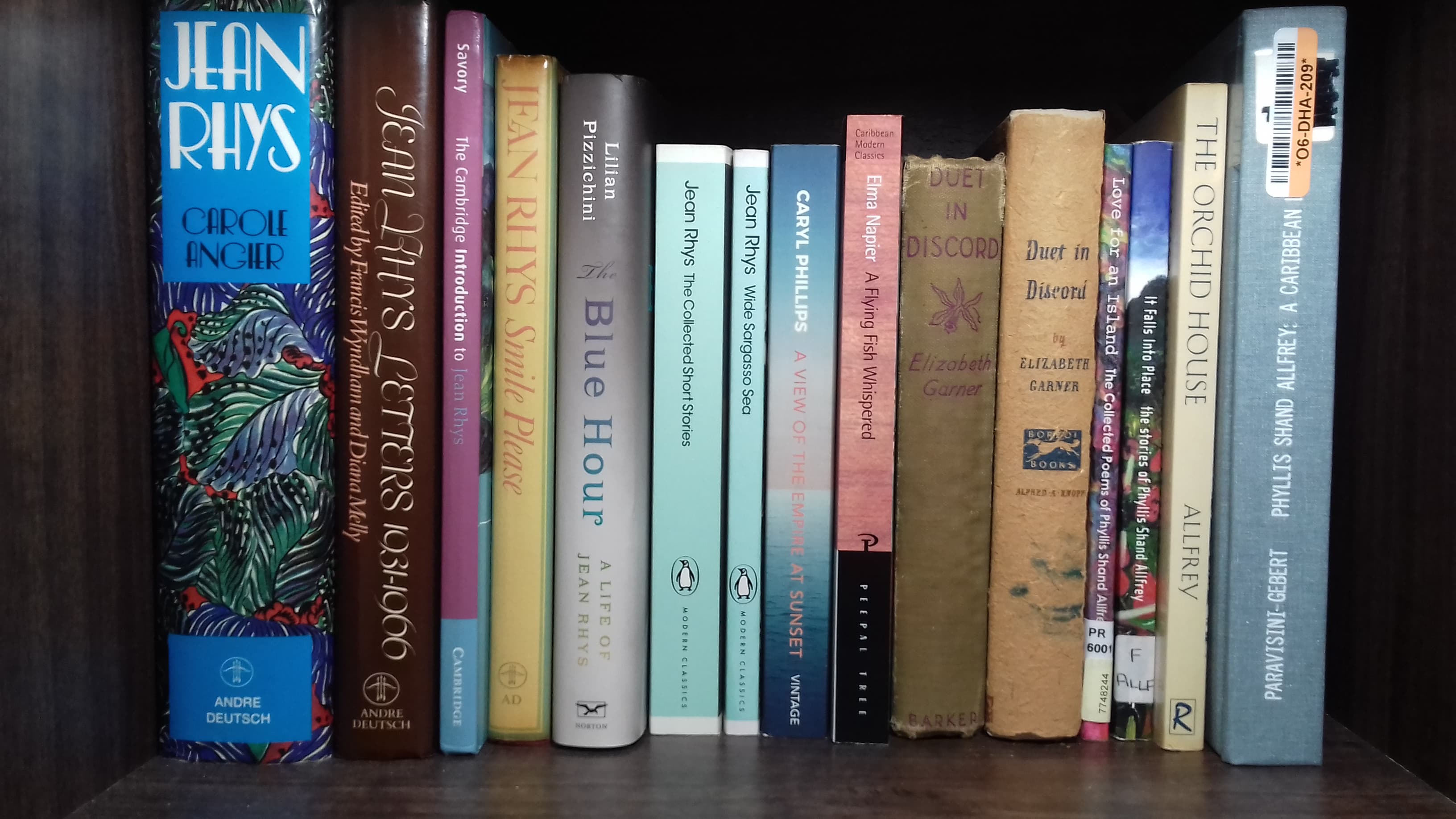
Phyllis Shand Allfrey (1908-1986)
- In Circles (poems, 1940)
- Palm and Oak (poems, 1950)
- The Orchid House (1953)ISBN 978-0-8135-2332-3
- It Falls into Place (2004) ISBN 978-0-9532-2241-4
- Love for an Island: the Collected Poems of Phyllis Shand Allfrey ISBN 978-0-9571-1875-1
Phyllis Byam Shand Allfrey (24 October 1908 – 4 February 1986) was a West Indian writer, socialist activist, newspaper editor and politician of the island of Dominica in the Caribbean. She is best known for her first novel, The Orchid House (1953), based on her own early life, which in 1991 was turned into a Channel 4 television miniseries in the United Kingdom. (Wikipedia)
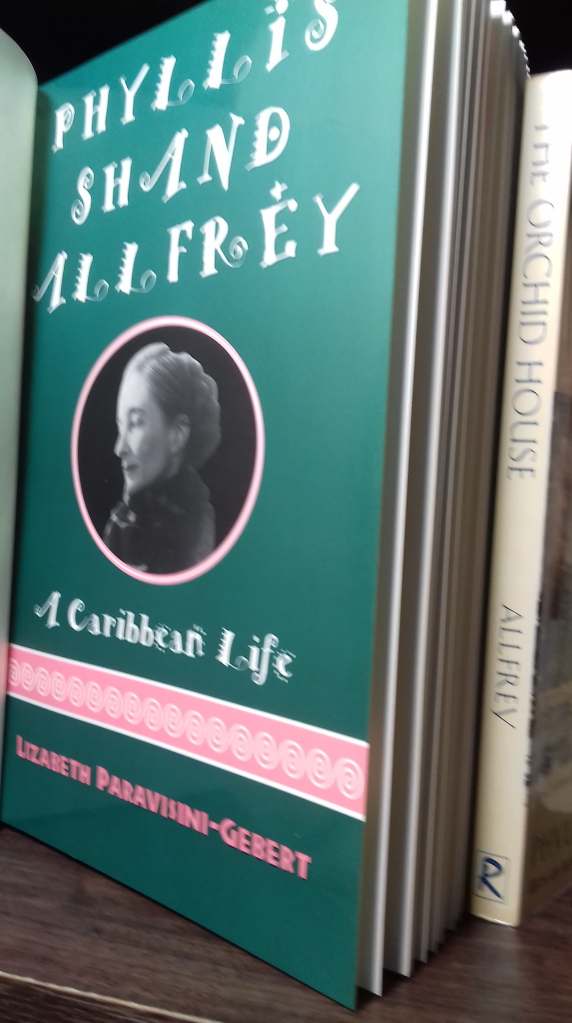
iographer, Lisabeth Pravisini-Gebert writing in the Phyllis Shand Allfrey : A Caribbean Life that Allfrey could trace her lineage to the French aristocracy. She said that her family was colonial administrators, of “which there was no mixing with the growing negro population.” Like Napier, Allfrey would find her calling in politics and would serve in the short-lived West Indian Federation.
Phyllis was born into a white colonial, ruling-class family who have been resident in the West Indies since the 17th Century. According to (Paravisini-Gebert pg6) Shand’s biographer writing in the Phyllis Shand Allfrey: A Caribbean Life on her mother’s branch of the family tree her ‘earliest ancestor in the West Indies’ was William Byam whose direct line through his father could be traced to one of the knights of King Arthur and the Round Table in AD 540. He was a ‘pioneer West Indian planter in Barbados in the 1600s. “In 1645 young Major Byam was among royalist officers imprisoned in the Tower of London during the uprising of Oliver Cromwell and the parliamentary army during the English Civil War. He and his fellow Royalists were consequently banished to Barbados, where he received a large grant of land, was appointed the treasurer of Barbados, and which was a ‘fledgling British colony and then a Royalist refuge.’

However, in 1651 the British Parliament were fearful of the rise in the number of Royalist on the increasingly wealthy colony could be used as a base from which to launch a bid to restore the monarchy. In 1652 The ‘Commonwealth navy, retook the colony and Major Byam and his men were banished this time to Suriname where he eventually became Governor. In 1667 Surinam was besieged by a Dutch fleet. Byam surrendered, and the Treaty of Breda that followed saw Surinam now becoming a Dutch territory. The English planters and some 4000 enslaved were ‘moved to the island of Antigua.’ Byam became governor of Antigua and died there age 47 in 1669.
Phyllis’s ancestry is, according to Irving Andre in his Distant Voices, related in ‘excruciating detail’ in Caribbean Life. Her paternal great-grandmother married Francis Shand, a descendent of William Byam and the scoin of a family of absentee West Indian merchants and ship owners in Liverpool. Phyllis’s grandmother, Marion Crompton was related to the Cromptons who also had been resident in Dominica for several generations and could trace her family connections to French ‘ancient country gentry’ and the uncle of ‘Empress Josephine, Robert -Marguerite Tascher de la Pagerie, BaronTasher (1740 -1806)” who would marry Napoleon Bonaparte. She and the illustrious, Dr. Henry Nicholls, a physician form England, married in 1877.
(To be continued)

 ALBERT WILLIAMS Reporting
Reblogged this on UK-CARIBBEAN.
LikeLike