
Jean Rhys CBE (1890–1979)

ean Rhys, controversial, but indisputable, a true modernist, legend that 40 years after her death continues to hold sway over her ever-growing readership spellbound with her particular rendering of postcolonial fiction/memoir writing craft.
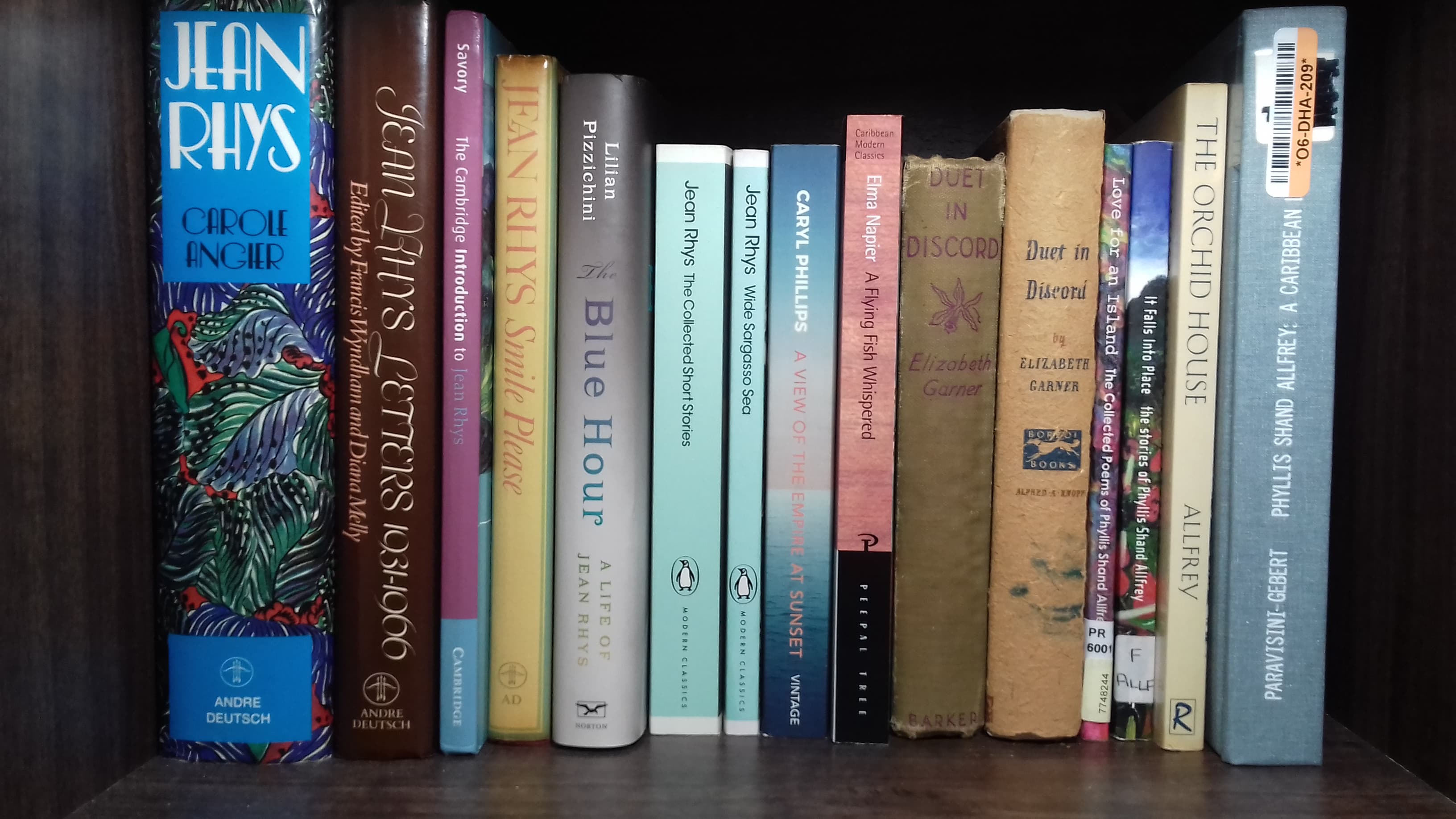
Phyllis Shand Allfrey writing in her article in the star of 1968 referred to Rhys as ‘the most famous Dominican.’ No other cultural figure from Dominica has been written about more than Jean Rhys. According to biographer, Lizabeth Paravisini-Gebert, writing in a paper, JEAN RHYS AND PHYLLIS SHAND ALLFREY:THE STORY OF A FRIENDSHIP remarked, “Scholarship on Rhys is extensive and varied, encompassing some thirty books and more than one hundred articles.”
Moreover, the first editions of her books are rare and a signed copy of her Voyage in the Dark (1934) is on sale for US$3,490 in an online bookstore. story of Jean Rhys is another blockbuster waiting to happen. Obviously, the most prolific and the most revered of the trio of white, Dominicans were are surveying in this post. Her life in contrast brings to the fore the Dominican childhood that Napier could not have captured.
Jean’s father, was William Rees Williams, a Welsh doctor. “Who was reported to have arrived in Dominica on 18 January, 1881,”( Thomas S. ) A few years after arriving in Dominica in the mid 1800s, he purchased two estates.
…in her familiar and unsteady later hand. Signed editions of the author’s early works are very scarce partly because by the time she became well known towards the end of here life and her signature was more sought after many copies had already been lost.”
London Rare books
Her long-time friend and editor, Diana Athill writing in the foreword to Jean’s unfinished autobiography, said that it was Novelist, David Plante, who assisted Jean in “taking down her words, typing them out, discussing them and reading them back to her for revision,” when Rhys was advancing in age and poor health in her mid eighties. In his own publication ‘Difficult Women A memoir of three‘, which besides his accounts being in the presence of Jean Rhys, is an autobiography that sketches his professional associations with Sonia Orwell and Germaine Greer. He candidly recounts how Jean Rhys explained to him how she started writing. “When I was little, I heard voices in my head that had nothing to do with me. I sometimes didn’t even know the words. But they wanted to be written down, so I wrote them down,” (Plante D. 1979, p11).
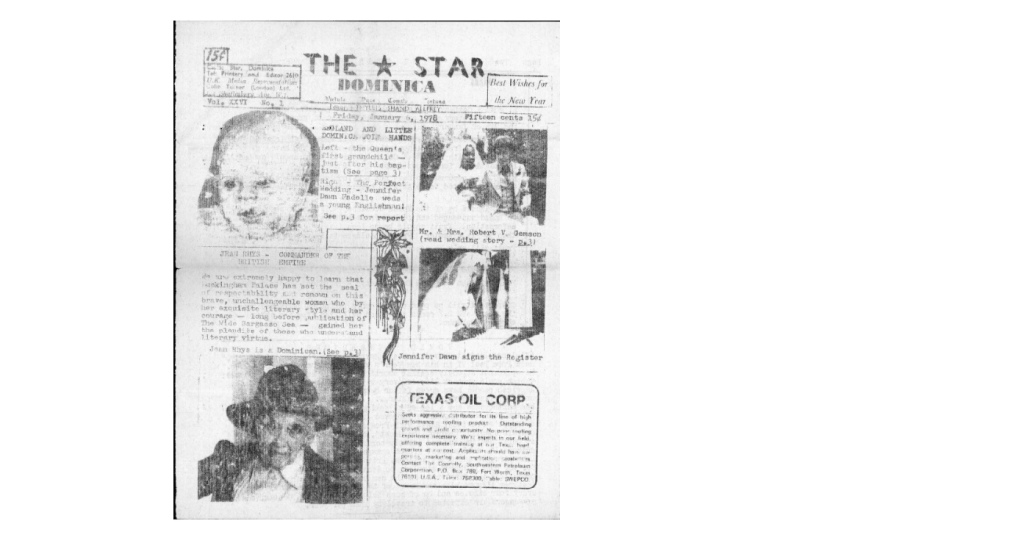
Writing in her autobiography that she was working on up to her death, but was published posthumously as Smile Please: An unfinished autobiography, Rhys recounts that her father came to Dominica when he was nearly thirty. “I know more of my mother for she was born in Dominica, ” she relates, ” on what was then Geneva Estate, and Geneva estate was part of my life. In another musing she says, “My mother was a Miss Lockhart, a granddaughter of James Gibson Lockhart who arrived from Scotland at the end of the 18th Century, she said,
” He died before the Emancipation act was passed, and as he was a slave-owner the Lockharts, even in my day, were never very popular. That is putting it mildly,” (Rhys J. 1979 p 33).
The Lockharts may have owned slaves, but they were not alone. Lennox Honychurch In The Forests of Freedom – The Fighting Maroons of Dominica, disclosed that on August 1, 1834, when slavery formally abolished in the British West Indies, there were “668,000 enslaved labourers in the British West indies.” The Centre for the Study of the Legacies of British Slave-ownership database returns some 871 claims were made in Dominica from planters for compensation for the loss of their enslaved workforce. A number of merchants, lawyers doctors and colonial officials also owned estates and made claims for compensation. Claim 778, James Potter Lockhart, listed as a merchant and slave-owner, made a claim for £5,646 4s 9d for the loss of his slaves at the Geneva Estate but he was unsuccessful. A counter-claim was made by the awardee, a London merchant and partner in T & W King creditors, as “a bond creditor for £10964 5s 3d at 5%”.
Charles Court, ‘Resident slave-owner, attorney and merchant on Dominica,’ and ‘Member of HM’s Privy Council for Dominica in 1832,’ has been found to have been actively involved the enslavement of people in Dominica in the 1820s. He was the ‘successful claimant’ for no less than 6 claims, and was associated with no less than 12 estates, either as owner, joint-owner or agent. Lockhart was his trading partner. In 1820 they set up as Lockhart and Court. According to the site, “Lockhart, Potter and Court‘ as attorneys of Thomas and Peter Turquand for Hampstead estate in 1820.”
“Jean Rhys would address in her writings the impact that being the descendant of a slave owner had on her growing up, and her creole beginnings continued to affect her even when she migrated to England.
For the Jean Rhys neophyte, it is advisable to ease into her writing with, The Cambridge Introduction to Jean Rhys by Elaine Savory for example. Or Irving Andre’s Distant Voices – The Genesis Of An Indigenous Literature In Dominica.’ This is even more applicable the further your point of reference is from the circumstances that gave birth to the Jean Rhys legacy. Jamaican novelist, Caryl Phillips’s has based his novel A View of the Empire at Sunset, published in 2018, is a biopic of Rhys’s life. Besides, being a postcolonial writer, Rhys could also be termed a interwar author. Her earliest short stories and novels were written during and reflect the atmosphere of The Great Depression and World War I (1914 -1918) and World War II, (1939 to 1945.)
Her unfinished autobiography traces a candid picture of her life from a sleepy post colonial outpost in the West Indies, to a turbulent metropolitan Europe.
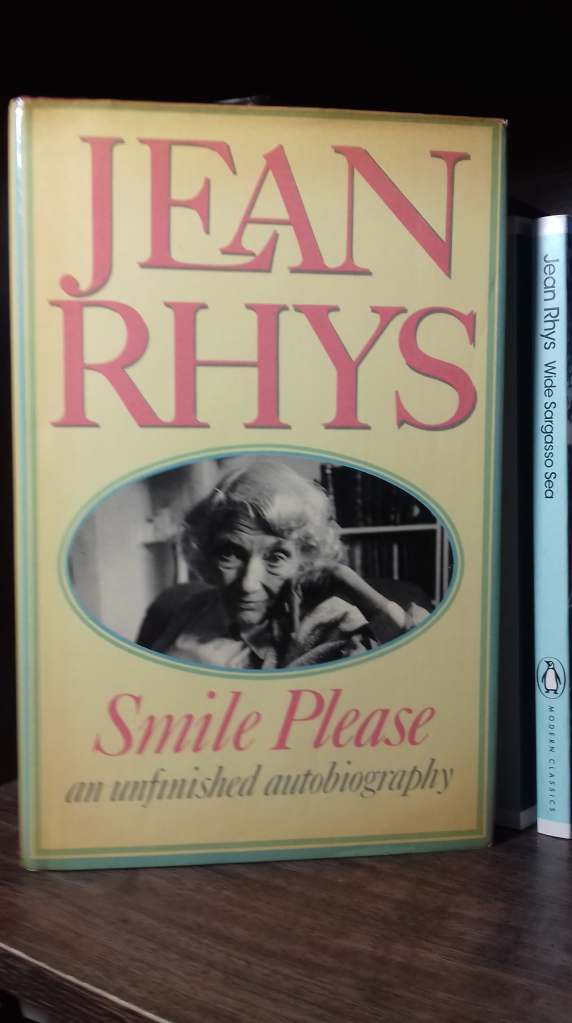
Her writings and publications according to Wikipedia included:
- The Left Bank and Other Stories, 1927
- Postures, novel, 1928 (published in the US as Quartet, 1929)
- After Leaving Mr. Mackenzie, novel, 1931
- Voyage in the Dark, novel, 1934
- Good Morning, Midnight, novel, 1939
- Wide Sargasso Sea, novel, 1966
- Tigers Are Better-Looking: With a Selection from ‘The Left Bank’ , stories, 1968
- Penguin Modern Stories 1, (with Bernard Malamud, David Plante, and William Sansom), 1969
- My Day: Three Pieces, stories, 1975
- Sleep It Off Lady, stories, 1976
- Smile Please: An Unfinished Autobiography, 1979
- Jean Rhys: Letters 1931–1966, 1984
- Early Novels, 1984
- The Complete Novels, 1985
- Tales of the Wide Caribbean, stories, 1985
- The Collected Short Stories, 1987
- Let Them Call It Jazz, stories, 1995
Jean Rhys, born Ella Gwendolyn Rees Williams (24 August 1890 – 14 May 1979), was a mid-20th-century novelist who was born and grew up in the Caribbean island of Dominica. From the age of 16, she was mainly resident in England, where she was sent for her education. She is best known for her novel Wide Sargasso Sea (1966), written as a prequel to Charlotte Brontë‘s Jane Eyre.[4] In 1978, she was appointed a Commander of the Order of the British Empire for her writing. (Wikipedia)
(To be continued)

 ALBERT WILLIAMS Reporting
Reblogged this on UK-CARIBBEAN.
LikeLike