
Elma Napier (1892–1973)
When the Napiers arrived in 1932, it was just under a hundred years since slavery was abolished in 1834 in Dominica. The Colonial elite was in retreat. Estates were closing down and the white population in Dominica was outnumbered. Scotland has had a long colonial past with Dominica. A number of Scottish professionals have taken up residence for one reason or another. A land grant was made in 1804 in the parish of St Joseph, Dominica to James Laing, John Lucas and Robert Reid who were slave-owners and owned the Macoucherie Sugar estate. Dr John Imray, who resided in Dominica from 1832 and died on his estate at St Aroment in 1880, published The Useful Woods of the Island of Dominica, a detailed description of 169 trees. He would also play an extensive role in Dominica social life and politics during his long practice on the island. Other Scot residents worthy of mention at this time are Robert Melville and Jonathan Troup It is perhaps no coincidence then that the first black woman to study at the University of Edinburgh was Clara Marguerite Christian from Dominica.
According to Irving Andre, Dominica has long held the fascination of eccentrics, scientists and other bohemians seeking paradise. During the centuries of conquest, Dominica was a refuge for the Kalinago, and the maroons.
Elma Napier was born Elma Gordon-Cumming in Scotland on 23 March 1892. She was the eldest of five children born to her father, Sir William Gordon-Cumming, who was a landowner and a Lieutenant-Colonel in the 4th Battalion of The Scots Guards. Her mother was Florence Josephine Gordon-Cumming née Garner; a Scottish heiress. Polly Patullo, writing in the memoir of Elma Napier Black and White Sands that she wrote in 1962; but was only first published by Patullo’s Papillote Press in 2009 remarked that she was “the eldest child of Sir William Gordon Cumming, whose family owned ‘half of Scotland.”
Elma first visited Dominica while it was still a colony, with her second husband, Lennox Napier, as part of tour of the West Indies in 1931, and instantly determined to settled there the following year. Napier lived a full an active life as a mother, adventurer, writer and politician.
Napier’s life story reads like an epic Scottish/West Indian drama starring Elma Napier as herself. Her anecdotes and vignettes are drawn from the extraordinary moments of her sojourn in Dominica for nearly half a century.
In Black and White Sands: A Bohemian Life in the Colonial Caribbean she writes of the decision to settle in Dominica, the people she met, her surroundings and her journey in such detail that only a person of her unique insights could capture in her own unique literary style. A fact that was not lost by friend and novelist Alec Waugh who wrote several books depicting life in the West Indies including The Fatal Gift that memorializes the Napier’s. story.
- Nothing So Blue (1927)
- Youth is a Blunder (1948)
- Winter Is In July (1949)
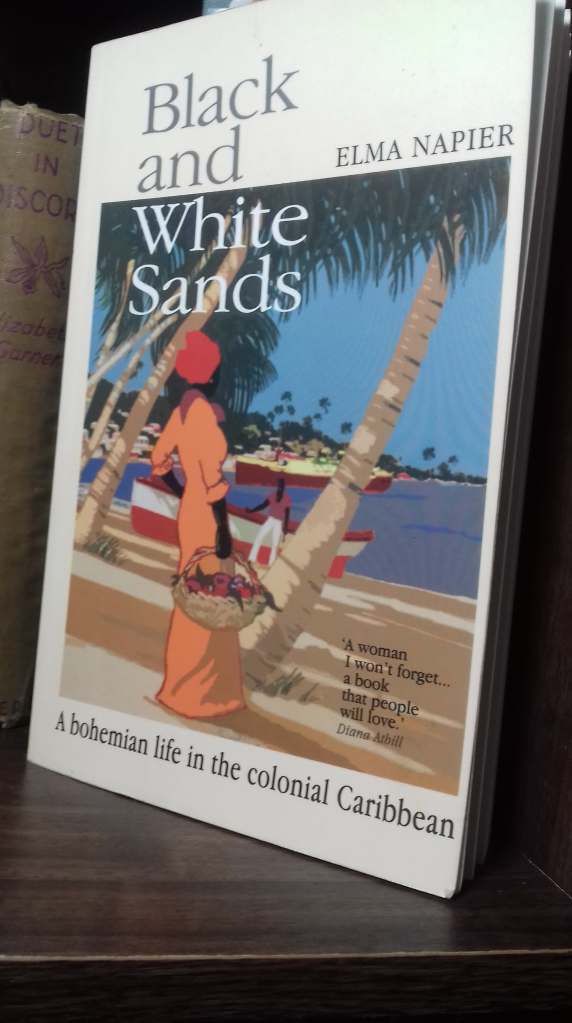
- Black and White Sands (written 1962; first published Papillote Press, 2009, ISBN 978-0-9532224-4-5)
- Carnival in Martinique (1951)
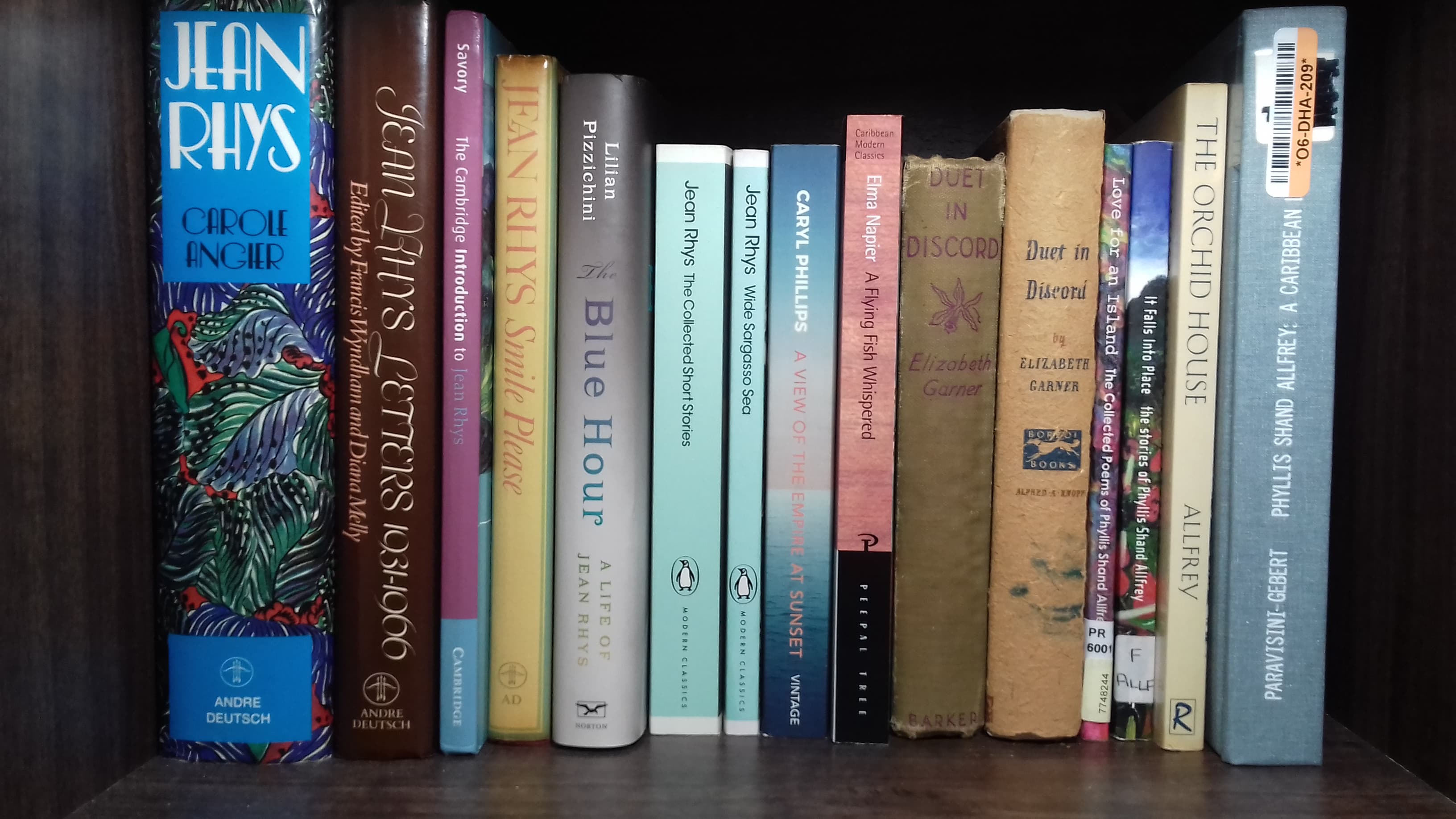
- Duet in Discord (1936)
- A Flying Fish Whispered (1938; Peepal Tree Press, 2011, ISBN 978-1-84523-102-6)
Elma Napier (née Gordon-Cumming; 23 March 1892 – 12 November 1973), also known as Elma Gibbs and by the pen-name Elizabeth Garner,[1][2] was a Scottish-born writer and politician who lived most of her life in the Caribbean island of Dominica. She published several novels and memoirs based on her life, and was the first woman elected to a Caribbean parliament. (Wikipedia)
The British colony of Dominica has long lured adventures, doctors, and eccentrics to its shores. The role of the Welsh and the Scottish in the Atlantic slave trade, and their role in Dominica is the subject of another blog. In the 1930s, the keeping of diaries and journals was well entrenched as a pastime or a necessity when so much depended on manual labor, and the internet was not yet invented. For Elma, traveling and experiencing new lands and people was in itself, second nature. Her life in Dominica is the stuff that great directors look for to make those epic family dramas. The types that Dominicans would rush to the Arawak and Caribbean cinemas for a matinee in the afternoon. Elma Napier and her family reached Dominica as she turned forty in 1932. She laid roots and her descendants are still thriving there.
Writing in her memoir, Black and White Sands: A bohemian life in the colonial Caribbean Napier recalls that the family decided to visit the West Indies acting upon the doctor’s advice that her husband would benefit from warmer climes. “Dominica was the only island for which we had no letters of introduction, and with Dominica, we fell in love at first sight, an infatuation without tangible rhyme or reason, yet no more irrational than any other falling in love,” (Napier E 2009, p8). Whether describing the purchasing of the land and the building of her home at Point Baptiste or describing a trek in the rainforest, her attention to detail is immaculate. Black and White Sands is a memoir recounting her life in Dominica up to around 1972.
By the time I had read up to page 76 of the page-turner of a book, it dawned on me that Elma Napier was indeed a consummate storyteller. A writer who captured the feel of the island through the decades that she made the island her home.
(To be continued)

 ALBERT WILLIAMS Reporting
Reblogged this on UK-CARIBBEAN.
LikeLike